
Expert Antadze: ‘US failure to secure desired outcome from Iran amounts to defeat’

Author
Front News Georgia
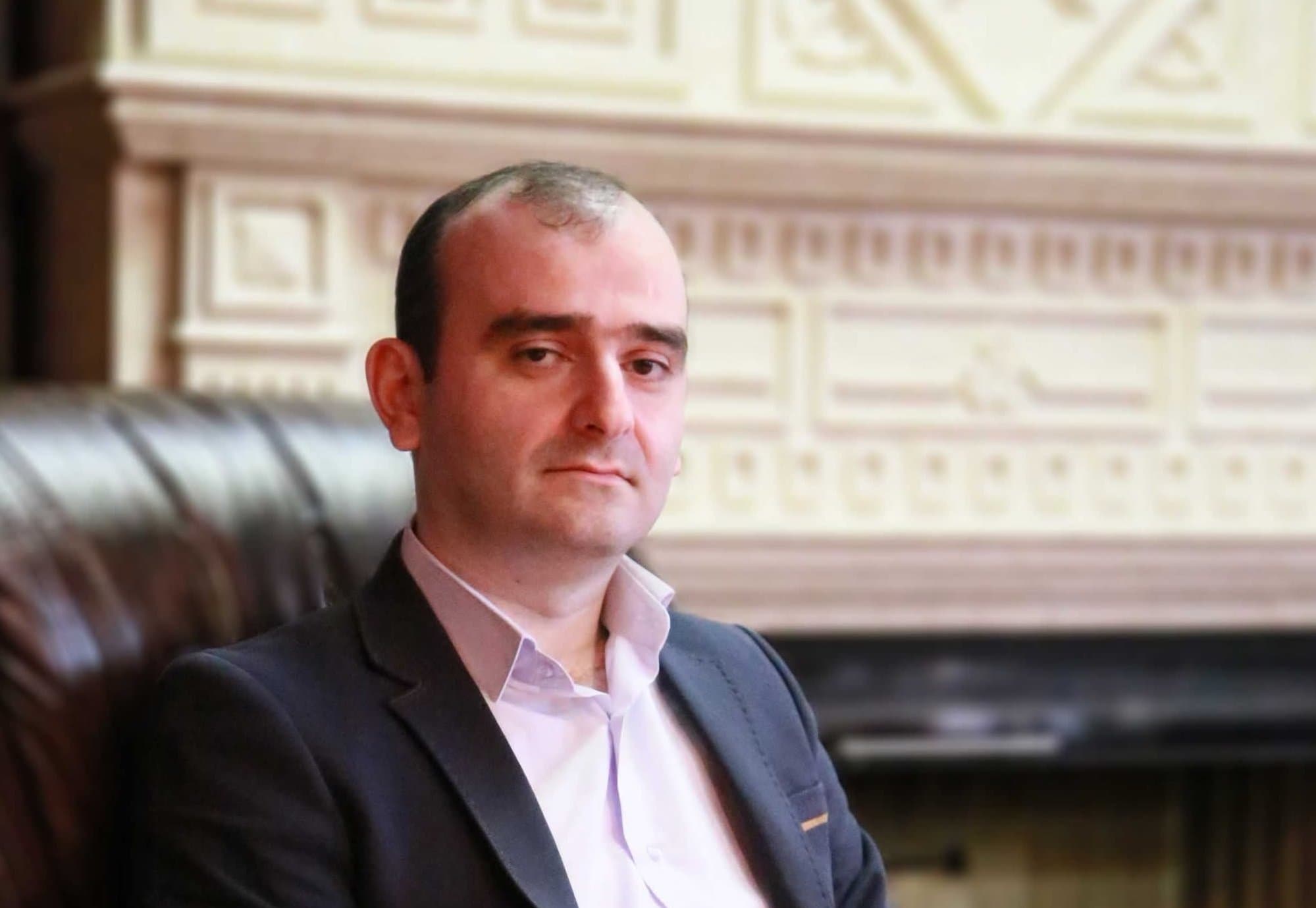
The developments surrounding Iran are entering a new and critical phase, in which, alongside the demonstration of military force, the role of back-channel diplomacy is becoming increasingly important. In an interview with Front News, international relations specialist Giorgi Antadze analyses the White House strategy, Pakistan’s mediation efforts and the domestic political fractures reflected in Tehran’s official statements. According to the analyst, despite the United States’ considerable military superiority, the main challenge remains achieving a political outcome, because for Washington “victory” lies solely in Iran abandoning its nuclear ambitions and agreeing to substantive negotiations.
Q. How do you assess Pakistan’s role as a mediator in this process and how realistic is the Iranian Government’s statement that “no meeting is planned”?
A. Pakistan is now trying to make the most of the situation and enhance its prestige. Its involvement in this conflict, as a neutral intermediary, provides a good opportunity to achieve that. At the same time, Pakistan is a country closely aligned with China, which appears to make it a more or less acceptable state for both sides – for the United States as well as for Iran.
As for the uncertainty and the conflicting information coming from Iran, this suggests the existence of internal divisions. There appears to be a struggle between different factions and these contradictory statements are the result of that. The statements of the Islamic Revolutionary Guard Corps differ significantly from those of the political leadership, which is adopting a softer tone. Therefore, all of this points to internal political tensions within Iran.
Q. What can we say now about the Iranian side – who are the so-called “negotiating heads” engaging with [US President Donald] Trump and the Americans? Can we say that it is the political leadership that is directly in contact with the United States?
A. I do not know for certain which specific group is in contact with Trump and the American negotiating team. However, judging from the fact that the Revolutionary Guard Corps is maintaining a hard-line position, one might assume that if any form of agreement is being prepared, it is being done in a more moderate format.
No one knows for certain what is happening. In general, it can be said that, in practical terms, time is currently working in Iran’s favour. They have undoubtedly suffered significant damage, but they are still far from political defeat. That is why they are trying to escalate the situation as much as possible. The Revolutionary Guard Corps, for example, seems to be pursuing exactly that approach.
Q. US Defence Secretary Pete Hegseth claims that Iran’s navy and air defence systems have been virtually destroyed, while the naval blockade is strengthening by the day. In your analysis, does this “military outcome” leave room for diplomatic manoeuvre, or is it a precondition for Iran’s full capitulation?
A. Military losses alone are not enough – if the desired political result is not achieved, then for the United States this is not sufficient. The United States is failing to secure the desired outcome from Iran after the use of military force, namely Iran’s agreement to negotiations. This is effectively tantamount to defeat. There are signs of this, but we must still wait to see how events unfold. Ultimately, political results remain the decisive factor.
According to American sources, only around 50 per cent of Iran’s missile arsenal and military capabilities have been destroyed. Overall, this is not the level of damage that would trigger a decisive turning point in the war or force Iran to agree to the United States’ core demands, including those concerning nuclear weapons. If these demands are not met, simply claiming that the situation is moving towards victory is not enough.
Q. Hegseth emphasised that the Strait of Hormuz is more important to Europe than to the United States. Does this suggest that the Trump administration is shifting responsibility to European states and how might the regional security architecture change?
A. To speak of a new security architecture, the decisive factor will first of all be the outcome of this war. That remains unclear and no one yet knows what that outcome will be. Accordingly, there is no definitive answer to this question at present.
As for the Strait of Hormuz, another factor at play is Trump’s frustration with Europe’s passivity, which is why he is directing criticism towards them as well. However, it is true that America’s dependence on the Strait of Hormuz, particularly in terms of oil, is minimal. The United States is self-sufficient and even exports oil.
Q. President Trump has announced a meeting in the US between the leaders of Israel and Lebanon. How realistic is such a high-level direct dialogue when Trump continues to mention the Hezbollah factor and says the US will help Lebanon defend itself?
A. The issue of Hezbollah appears to remain constantly on the negotiating table from Iran’s side. We know that Iran is demanding a ceasefire, which would also apply to proxy forces. On that basis, the Americans are trying to exert influence over Israel. It appears that Iran is maintaining a hard-line stance on this issue and therefore the United States is attempting to persuade Israel.
Q. Trump says the parties have agreed to extend the ceasefire by three weeks. Is this enough time for a long-term agreement, or is it merely a temporary tactical pause for regrouping forces in the region?
A. It is not enough time for a long-term agreement. A temporary ceasefire means that this is a pause, not the end of hostilities. Therefore, only once we see the outcome of the negotiations will we be able to say whether this could genuinely evolve into the framework of a lasting peace.
Q. President Trump says that he has “all the time in the world”, whereas Iran does not. How does this emphasis on strategic “impatience” affect international relations dynamics and how capable is he of handling several crisis points simultaneously – Ukraine, Iran and the Middle East?
A. In the short term, it is impossible to resolve the issue of Ukraine, first and foremost. As for Iran, that will depend on how the current developments unfold. Trump is under domestic political and economic pressure. We know that the United States is approaching midterm elections. In addition, the World Cup is approaching, with the US as one of the host countries.
Against the backdrop of these major events, Trump is trying to force a resolution to the Iranian crisis as quickly as possible. He understands that the political cost he may have to pay will be high, which is why he is seeking to bring this conflict in the Middle East to an end in a timely manner.
Tags:
Giorgi Antadze