
Georgian expert Khatiashvili: Iran has shifted into survival mode, ‘might makes right’
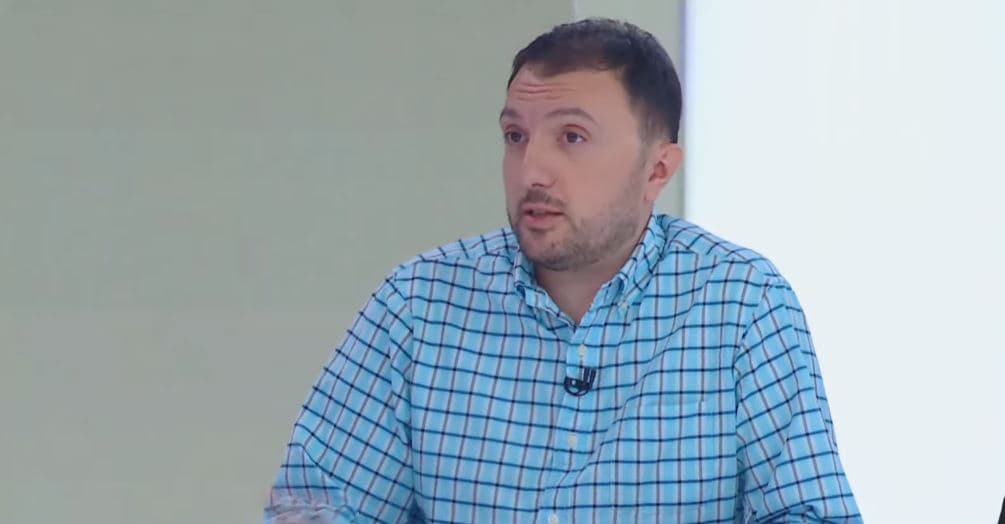

Author
Front News Georgia
As the world awaits the policy direction of the new US administration, the geopolitical map of the Middle East may be on the verge of major change. A second round of talks announced for Monday in Pakistan — with an unexpected mediator at the table — raises key questions: how far is Tehran willing to go in abandoning parts of its nuclear programme and sacrificing regional proxies in exchange for regime survival?
In an interview with Front News, international relations analyst Giorgi Khatiashvili discussed Iran’s strategic calculations under pressure, the role of Jared Kushner and Steve Witkoff in the negotiations, and Israel’s strategic interests, which may not fully align with Washington’s objectives.
Q. President Trump said the US is prepared to help “dig out” Iran’s buried nuclear infrastructure. How realistic is it that Iran would surrender this level of nuclear sovereignty, and what guarantees would it need in return?
A. If a major agreement is reached, it will not matter whether Iran digs out the 460 kilograms of buried uranium itself or allows the Americans to do it. Removing the uranium is the end result — the difficult part is getting to that point. It is not only about the physical challenge of where to dig in Isfahan; the real difficulty lies in agreeing on the broader terms of the deal.
If this were easy, JD Vance and Iran’s foreign minister would already have reached an agreement in Pakistan. The fact is, there are still major unresolved disagreements.
Q. JD Vance made it clear that Lebanon is not part of the ceasefire talks, while Iran considers it a priority. Could the Lebanon issue derail the Islamabad negotiations, or would Iran sacrifice Hezbollah’s interests to preserve its own regime?
A. As we know, talks between Lebanon and Israel have resumed for the first time in 34 years. As for whether Iran would sacrifice Hezbollah, the issue is that Iran is already focused on self-preservation. What kind of support can Iran realistically still provide Hezbollah with? Even Iran’s own missile resources for targeting Israel are finite.
Of course, Iran wants a ceasefire on both fronts. But if Israel refuses to reach an agreement with Hezbollah, the real question becomes whether Iran still has the capacity to continue bombing Israel. Ultimately, power determines outcomes. No matter how much Iran may care about Hezbollah, it will not destroy itself for that cause.
We have seen this before — Yahya Sinwar did not ask anyone before planning the October 7 attack. Everyone advised against it. Iran also did not become deeply involved afterward. So when it comes to survival, Iran is capable of acting rationally.
Q. Kushner’s appearance in the delegation has been interpreted by some as a sign that a new version of the “deal of the century” is in the works for Iran. What kind of regional arrangement might Tehran be expecting beyond a ceasefire?
A. We should not overstate Kushner’s role, because he is also part of the delegation handling Ukraine talks. The key point is that Trump trusts his son-in-law. Kushner served as a negotiator during Trump’s first term and was one of the architects of the Abraham Accords, so Trump relies on him.
He has similar trust in his friend Steve Witkoff. This duo is involved in every major negotiation effort. But in reality, it seems they are not solving much — the war in Ukraine is not over, and now a second conflict involving Iran has begun.
Q. Trump’s threat to impose 50 per cent tariffs on countries supplying arms to Iran directly targets China and Russia. Could this limit Iran’s room for manoeuvre, or does Tehran still have real allies?
A. This kind of threat from Trump is not new. Russia is already under heavy sanctions, but it has found ways to adapt and clearly is not overly concerned. Russia is already a “fully sanctioned” jurisdiction, so I do not think such threats will intimidate the Kremlin.
As for China, the threat of 50 per cent tariffs is unlikely to force Beijing to back down. If China wants to support Iran, it will continue to do so. Russia and China are the least likely to abandon an ally like Iran simply because of tariff threats.
Q. Israel’s prime minister says Iran is weaker than ever. Is there a risk Israel could still strike during negotiations to force Iran into maximum concessions?
A. As for Israel, we saw that it agreed to Trump’s proposed two-week ceasefire. But behind that, there may still be differing strategic goals. For the US, the main priority is preventing Iran from obtaining nuclear weapons, even if that means the current regime remains in place.
For Israel, however, the Islamic Republic itself is a sworn enemy. That means regime change is a much more important objective for Israel. Still, if Iran were fully denuclearised, that would benefit Israel as well.
That said, Israel might see greater strategic value in Iran being broken into several parts — a kind of “Balkanisation.”
Q. Why was Pakistan chosen as the venue for this historic meeting, and how significant is its role as mediator given its unique ties with both sides?
A. No one expected Pakistan to emerge as the mediator bringing the two sides together. There are likely several reasons for this. Historically, Pakistan has had good relations with the United States and has received military assistance from Washington.
At the same time, it also has good relations with Iran — both are Islamic states and neighbouring countries. Pakistan has the channels necessary to communicate with both sides.
In extraordinary situations, unexpected actors often emerge, and Pakistan is one of them. It has taken on a surprisingly important and interesting role in facilitating this dialogue.
Tags:
Giorgi Khatiashvili