
Iran’s Uranium enrichment appears to be matter of national pride, deadlock continues, Int’l analyst Khatiashvili
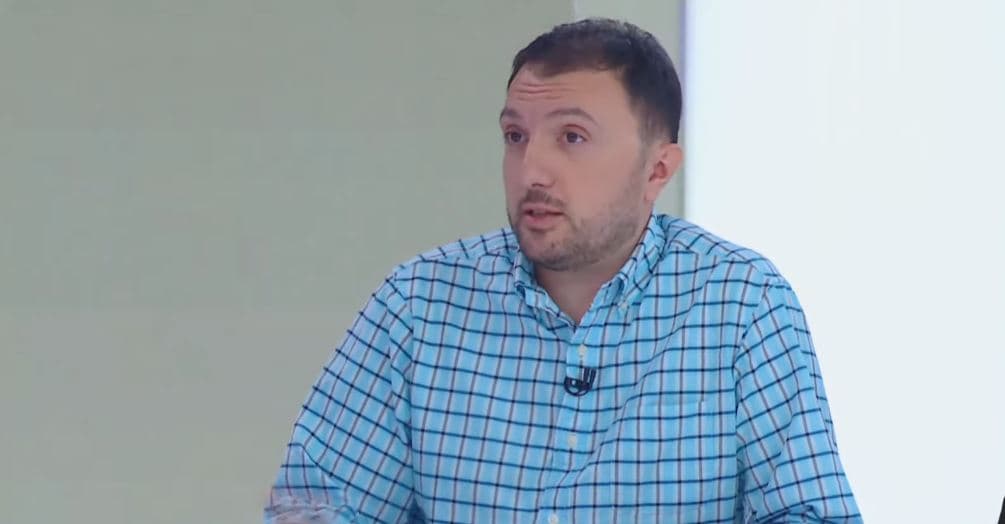
As for China becoming a mediator, that seems unlikely. China’s real leverage lies elsewhere: it purchases around 80 percent of Iran’s oil exports, Khatiashvili said

Author
Front News Georgia
The United States’ “maximum pressure” policy toward Iran is entering an increasingly confrontational phase, yet the absence of a clear long-term strategy from Washington is heightening the risks of regional escalation. Despite severe sanctions and an ongoing economic crisis, Tehran continues to preserve internal stability through its repressive apparatus, the functioning of what is often described as the “deep state,” and a degree of ideological legitimacy among segments of the population. At a time when Arab monarchies are reluctant to become directly involved in the conflict, and China appears more focused on protecting its economic leverage than assuming the role of mediator, the crisis is moving closer to a strategic impasse. In the event of a military escalation, the primary challenge for the South Caucasus - and particularly for Georgia - would likely be economic, including a possible rise in fuel prices, although the country itself is not considered a direct target of the conflict.
On these issues, Front News spoke with international relations analyst Giorgi Khatiashvili.
Q. American media outlets increasingly argue that Washington lacks a clear long-term strategy - an “exit strategy” - regarding Iran. How significant is the risk that Donald Trump’s “maximum pressure” approach could spiral out of control and unintentionally drag the United States into a regional war for which the White House has no endgame?
A. There probably is no concrete plan as such. More accurately, there is what we can infer substantively from Trump’s statements. For example, the logic seems to be: if Iran refuses to surrender - which was the essence of the initial phase and the threat that “we will destroy everything until they capitulate” - then Iran must ultimately give in. That, apparently, is the plan.
However, confidence that bombing campaigns would actually achieve such an outcome is probably much lower. We can see that President Trump has so far been hesitating. He continues to issue threats, time is passing, the clock is ticking, and the expectation appears to be that Iran will eventually “come to its senses.” These are indirect threats, but there does not seem to be a strong desire to actually carry out large-scale strikes.
The first and most important issue is this: fine, suppose you bomb everything and destroy major infrastructure - but Iran still refuses to surrender. What happens then? Secondly, Iran still possesses the capacity to trigger regional escalation and target its neighbors with the means at its disposal.
That is why we remain in this status quo. Iran is not allowing Gulf shipping to pass freely on one side, while the United States is effectively imposing pressure around the Strait of Hormuz on the other. It appears that uranium enrichment has become a matter of national pride for Iran - almost as if Tehran is saying: “We have fought for this for so long, and now we will not give it up.” And so, this deadlock continues.
Q. Some Western analysts argue that Iran’s economy and military resources have reached a critical threshold, yet the regime continues to maintain internal stability. In your view, what is the key factor preventing the Islamic Republic from collapsing under such intense isolation and sanctions?
A. There are several reasons why regime collapse has not occurred in Iran.
First of all, despite the destruction inflicted on parts of Iran’s military capabilities and the economic hardship inside the country, the internal structure - the so-called Iranian deep state - continues to function. As a result, the repressive apparatus also remains operational.
Poverty exists in Cuba and North Korea as well. If a regime manages to preserve its coercive mechanisms while the opposition is either in exile or disorganized, and there is neither a political nor an armed alternative inside the country, then the system can survive.
On the one hand, there is the repressive apparatus itself. On the other hand, it is extremely difficult to organize unrest or revolution while the country is effectively in a wartime environment and under bombardment.
A third factor is legitimacy. The Iranian regime may be unpopular among parts of the diaspora, but no regime - except perhaps North Korea - survives solely through coercion. There is also a certain source of legitimacy. For some segment of Iran’s population, the Islamic Republic is considered entirely legitimate and still retains a degree of public support.
We can debate percentages, whether support is larger or smaller, but it would be inaccurate to claim that nobody supports the regime. It is somewhat similar to the rhetoric we sometimes hear in Georgia - as if only the people standing on Rustaveli Avenue represent “the people,” while the government has no supporters at all. It is a comparable type of argument.
Q. Iranian President Masoud Pezeshkian says that dialogue does not mean surrender. Is this rhetoric aimed more at a domestic audience - the public and hardliners - or is it also a signal to the West that Tehran is prepared for compromise, provided it can preserve its dignity?
A. Yes, it means both things simultaneously.
On the domestic level, the message is: “We will not surrender.” Externally, however, the message is: “Let us talk.”
There is also a third dimension: Iran is trying to buy time. The United States does not want prolonged delays and is seeking a faster resolution. Iran, meanwhile, wants discussions over uranium enrichment levels and percentages - negotiations that could potentially drag on for years.
Q. Despite viewing Iran’s nuclear program as a major threat, Saudi Arabia and the United Arab Emirates reportedly urged Trump to postpone military action. How cohesive is the anti-Iran coalition in the region, and can the Arab monarchies exert meaningful influence over Washington?
A. To begin with, the reports themselves are contradictory.
At times we hear claims that the Saudi crown prince wants Iran bombed extensively, while at other times these same states appear worried about the escalation wave reaching them and crushing them in the process.
Their actual capabilities have become fairly evident. In reality, they are somewhat paper tigers. Aside from Saudi Arabia, Bahrain, Kuwait, the UAE, and Qatar are relatively small both geographically and demographically. Qatar’s population is around three million. Saudi Arabia is larger, with close to forty million people, but Iran has a population of around eighty million. Without the United States, these countries would struggle significantly.
Secondly, they do not actually want to become directly involved in this issue. That is why we see this contradictory behavior: at times they encourage the United States, while at other times they call for restraint and de-escalation.
They may be angered by Iran’s actions, but they are not going to launch a ground war against Iran. A direct land war is not something they are prepared for. As for airstrikes, the United States and Israel are already conducting those operations.
Q. I would also like to ask about China’s role. Following the meeting between Donald Trump and Xi Jinping, do you believe China could serve as a mediator in resolving the conflict, or do you rule out Beijing assuming such a role? China also says Iran should not possess nuclear weapons.
A. Iran should not have nuclear weapons - and if you ask Iran itself, it will probably say the same thing: “Yes, we should not have them.”
China, naturally, also has no interest in a nuclear-armed Iran.
As for China becoming a mediator, that seems unlikely. China’s real leverage lies elsewhere: it purchases around 80 percent of Iran’s oil exports. Beijing could use that leverage to pressure Tehran by effectively saying: “Either make concessions, come to your senses, or sign an agreement.”
But China is unlikely to formally assume the role of mediator between the United States and Iran. Its role will more likely consist either of reducing assistance to Iran or applying subtle economic pressure.
Q. If events nevertheless develop into a broader military scenario, how might this affect the security architecture of the South Caucasus, particularly Georgia? Should we expect Iran’s “asymmetric response” to target regional energy or logistical corridors?
A. People can say many things, but we have already lived through the first phase of the conflict, so we have a fairly good idea of what such a scenario could look like.
There will certainly be challenges - fuel prices, for example, would likely increase. However, Georgia is not a direct participant in the conflict, so Iran has no particular reason to target us directly.
Even when a drone crashed in Azerbaijan, the circumstances remained unclear, and Azerbaijan itself did not react hysterically. Therefore, if hostilities escalate again, I believe the second phase would resemble the first in terms of its impact on our region as well.
By Elza Paposhvili
Tags:
Giorgi Khatiashvili