Kobakhidze argued that Georgian society had learned how to assess such documents and understood the political motives behind them

Author
Front News Georgia
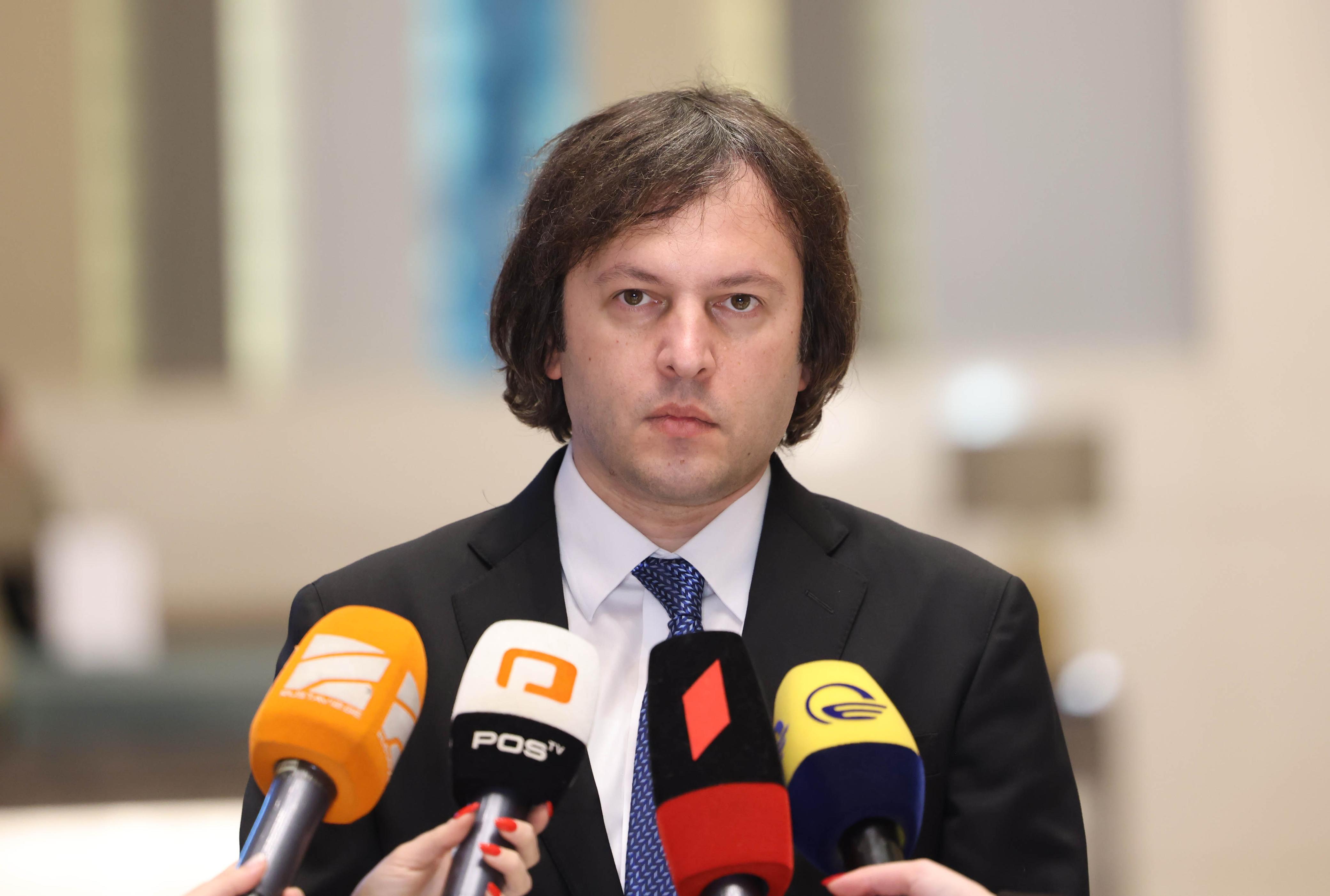
Georgian Prime Minister Irakli Kobakhidze has dismissed a recent European Parliament resolution as politically biased and accused opposition parties of acting on instructions from abroad following the country's parliamentary elections.
Speaking to journalists on Thursday, Kobakhidze said neither the European Parliament resolution nor similar documents adopted by European institutions carried any significance for Georgia.
"There is a very serious situation in the Parliamentary Assembly of the Council of Europe, just as there is in the European Parliament," he said. "You can read the text of the resolution and see that it contains numerous falsehoods and inaccuracies, in addition to being politically biased."
Kobakhidze argued that Georgian society had learned how to assess such documents and understood the political motives behind them.
The prime minister also criticised opposition parties that refused to take up their parliamentary mandates following the parliamentary elections in 2024.
He claimed opposition groups had coordinated their actions based on instructions received from outside the country.
"These groups acted according to orders. They were instructed not to enter parliament, and now we hear certain statements expressing regret about those decisions," Kobakhidze said.
He described the opposition as "foreign agents" rather than a genuine political opposition, alleging that their boycott of parliament had been part of a coordinated process directed from abroad.
The prime minister said it was now too late for opposition politicians to express regret over their decision not to participate in parliamentary proceedings.
Kobakhidze also rejected criticism from members of the European Parliament regarding the legitimacy of Georgia's government.
"Everyone knows very well that Georgia has a government elected by the people, one that represents the interests of the Georgian people," he said.
He added that neither individual members of the European Parliament nor the institution as a whole could change that reality.
"The European Parliament's role is not to assess the decisions of the Georgian people. Members of the European Parliament may dislike certain decisions made by Georgian voters, but they should respect those decisions," Kobakhidze said.
Tags:
Irakli Kobakhidze