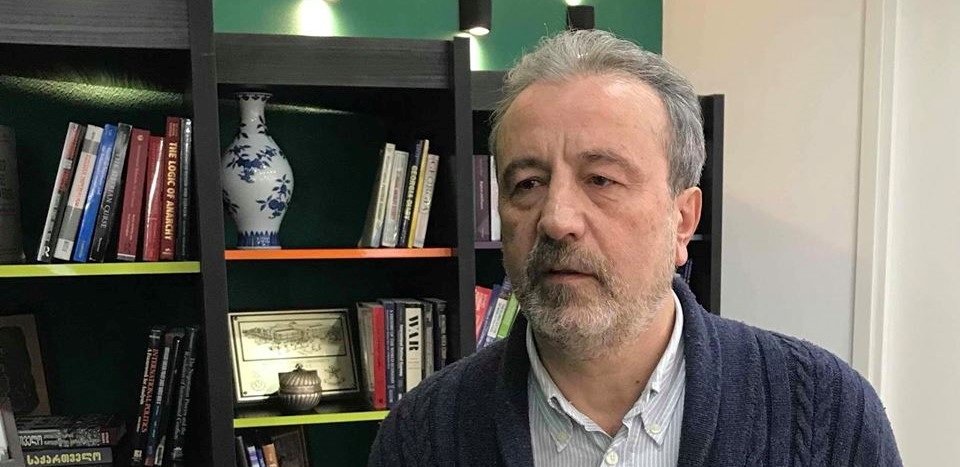
Zelenskyy encountered Prime Minister Kobakhidze and Foreign Minister Maka Botchorishvili, and he chose not to ignore them, Kakha Gogolashvili said

Author
Front News Georgia
The invitation extended to Georgia’s government to attend the European Political Community (EPC) summit in Yerevan - despite the ongoing tensions between Brussels and Tbilisi - has raised a number of questions. What lies behind Europe’s pragmatic approach, and why does the West continue dialogue with a government it accuses of democratic backsliding?
In an interview with Front News, Kakha Gogolashvili, Director of EU Studies at the Georgian Foundation for Strategic and International Studies, discusses the issues, as well as the prospects for a possible “reset” in relations between Tbilisi and Washington.
– How would you assess the European Political Community (EPC) summit held in Yerevan? Against the backdrop of strained relations with Brussels, Georgian Prime Minister Irakli Kobakhidze was nevertheless invited to the summit. How do you evaluate this decision?
– The European Union is, above all, a geopolitical institution. For the EU, it is important that every European country remains engaged within the continent, regardless of which political force is in power - unless the country is completely isolated, as is the case with Belarus and Russia.
Accordingly, Georgia’s invitation to the summit was entirely natural. There is nothing surprising or unusual about it. Despite the current disagreements, Georgia is not viewed as being in the “enemy camp.” The summit focused on security and economic cooperation, including broader security-related discussions. Democracy was also on the agenda, but democratic shortcomings are not, in themselves, grounds for excluding a country from participation in such a forum. Even Azerbaijan was invited, as were other countries such as Turkey, which is hardly considered a model democracy.
Therefore, someone from Georgia had to be invited. Whether or not the EU considers the current Georgian government fully legitimate, they are effectively compelled to engage with the authority that governs the country. The reality acknowledged by European actors is that the ruling Georgian Dream party possesses the resources necessary to control the state apparatus, maintain stability, and manage foreign relations. Consequently, they engage with the force that exercises actual political power.
– So, does this mean that the EU is effectively forced, by geopolitical realities, to cooperate with the current Georgian government because Georgia remains an important strategic platform in the Caucasus? And is the sharp rhetoric from Brussels likely to continue?
– The EU and its institutions speak openly about the issues they disapprove of. However, this does not mean they intend to completely abandon high-level political engagement with Georgia as a state, or with the political force that controls it.
Democracy in Georgia remains important and necessary for the European Union. At the same time, the EU currently places even greater emphasis on peace, security, and economic stability - including its own internal interests.
No one in Brussels is turning a blind eye to democratic backsliding in Georgia. That is precisely why certain forms of cooperation with Georgia have already been restricted. Most other formats of dialogue have been suspended, and political relations are, in practice, largely frozen.
Nevertheless, in order to prevent the collapse of Europe’s broader security architecture, Georgia must still participate in this geopolitical framework. That is why the Prime Minister received an invitation.
– The European Parliament recently adopted a highly critical resolution on Georgia. How realistic are the measures mentioned in the resolution — such as suspending funding or increasing political isolation - and how much political weight does the document carry for other EU institutions?
– Yes, such a resolution carries significant political weight. EU funding for Georgia has already been suspended in several areas. However, many additional measures are not so easy to implement.
For example, sanctions require consensus among EU member states. Some countries may argue that “Georgia is still strategically important at this stage” and therefore oppose sanctions. From both a security perspective and the standpoint of geopolitical projects, sanctioning Georgia is currently considered unacceptable by a number of European states.
There are likely governments within the EU still debating whether sanctions against the Georgian authorities would ultimately complicate future cooperation in areas where engagement may become necessary. That is one reason why restraint still exists.
There is also a distinction between the political demands voiced within the EU and the practical considerations of executive governments. The political wing of the EU may call for a complete suspension of relations, while national governments and executive institutions must also account for their own obligations and strategic interests. In pursuing their foreign policy objectives, they may not always fully implement the goals advocated by the European Parliament.
This is, in essence, part of the separation of powers within the EU system, where different institutions do not always operate in full alignment. Ultimately, however, the broader political trajectory still tends to reflect the views and demands expressed by the European Parliament.
That is why I believe these resolutions are shaping the framework that limits the scope of cooperation with Georgia. They establish red lines for EU member states, effectively signaling how far relations with Georgia may go - and where they should stop. The purpose of these resolutions is to restrain EU executive bodies from deepening ties with the Georgian government.
– Alongside tensions with Brussels, Tbilisi is also attempting to improve relations with Washington. According to reports, an aide to Marco Rubio is expected to visit Georgia in May. What can we say about this visit, and do you expect a reset in US-Georgia relations?
– First of all, relying solely on information coming from Georgian Dream makes it difficult to say with certainty whether anyone will actually come.
That said, I have never ruled out the possibility that the Trump administration - which is generally less focused on normative issues - may not view the current Georgian authorities as particularly problematic. Unlike previous administrations, they do not prioritize human rights or rule-of-law concerns to the same extent in their relations with other countries.
Therefore, I would not rule out the possibility that the Trump administration could pursue cooperation with the current Georgian government in certain areas.
However, much will depend on how valuable such cooperation is for Washington. The key question is what Georgia is able to place on the table - whether the issues important to the Georgian authorities align with US strategic interests, and to what extent the interests of Tbilisi and Washington overlap.
The construction of a Trump Tower in Tbilisi is not, in itself, strategically significant, though it may serve as a symbolically ambitious gesture for Trump personally.
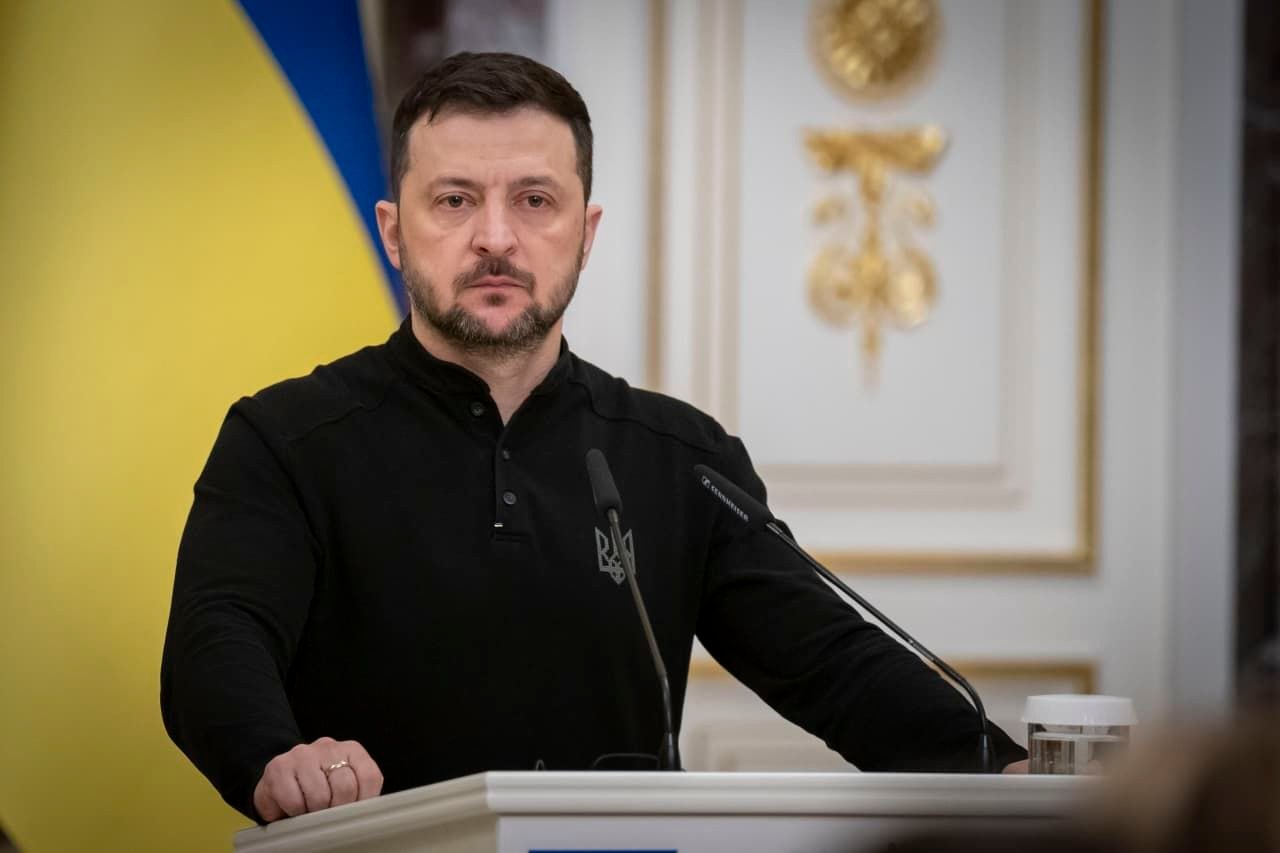
– On the sidelines of the summit, Ukrainian President Volodymyr Zelenskyy and Georgian Prime Minister Irakli Kobakhidze had a brief exchange. In your view, is this a sign that Kyiv and Tbilisi are attempting to reset relations?
– I would not even call it a formal meeting - it was more of a brief interaction. Somewhere in the hall, Zelenskyy encountered Prime Minister Kobakhidze and Foreign Minister Maka Botchorishvili, and he chose not to ignore them.
He could have done what he had done previously - simply avoid acknowledgment altogether - but this time he did not. We do not know what exactly was discussed, but I am certain that a number of grievances were expressed.
I cannot say what specific issues were raised, but one thing is clear: ultimately, Zelenskyy no longer represents only Ukraine and its national interests.
– Do you believe EU leaders or political circles in Brussels may have advised Zelenskyy to soften his approach toward Georgia?
– Yes, nothing can be ruled out.
At this summit, we saw Zelenskyy operating from positions that appeared coordinated with the European Union and its member states. The discussions were not focused solely on Ukraine, but on Europe’s broader interests and security challenges.
Zelenskyy has effectively emerged as a leader - albeit still an informal one, since Ukraine is not yet an EU member state. If the EU’s objective is to preserve at least minimal strategic engagement with Georgia despite political disagreements, and to avoid a confrontational environment that could undermine Georgia’s contribution to European security, then it is entirely possible that Zelenskyy is now viewing the issue through a broader European lens.
He may have concluded that the confrontational tone toward Georgia should either be softened or more carefully limited. I would not rule out the possibility that this issue was discussed with European leaders. Accordingly, they may have reached a common understanding that no side would pursue excessively sharp confrontation with Georgia.
By Elza Paposhvili
Tags:
Kakha Gogolashvili