For ruling party founder and honorary chair Bidzina Ivanishvili, it is undoubtedly important who becomes Patriarch

Author
Front News Georgia
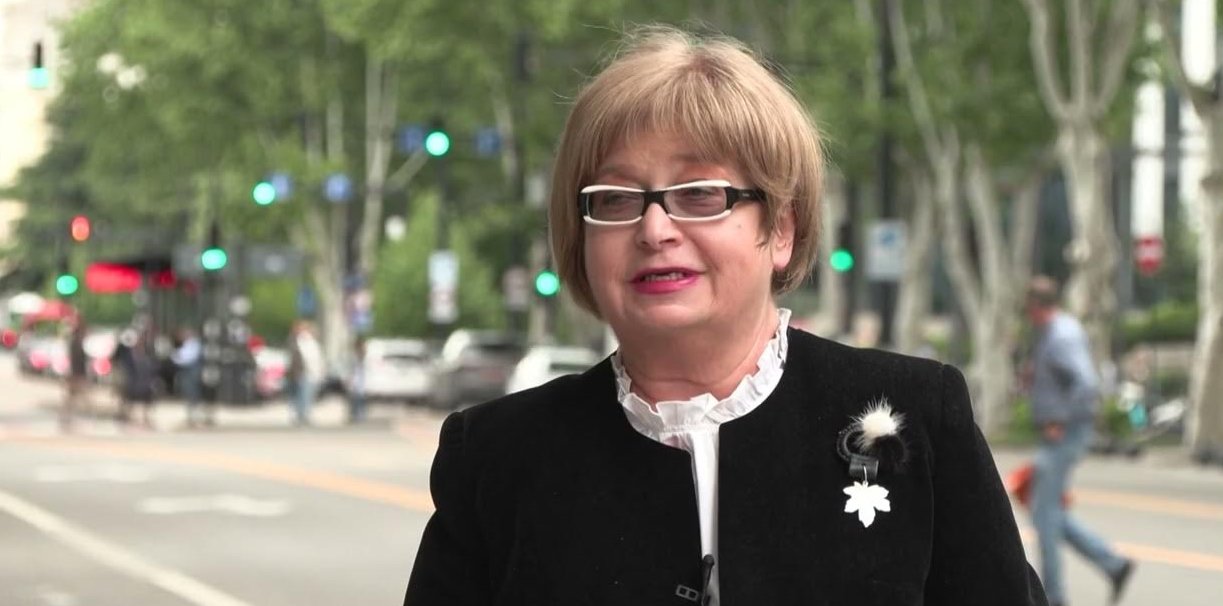
Developments surrounding the Patriarchate and the process of selecting a successor of late Patriarch Ilia II have become a focal point for both Georgian society and the political spectrum. In an interview with Front News, theologian Lela Jejelava assesses the balance of power within the Holy Synod, the real influence of Metropolitan Shio as locum tenens, and the political interests surrounding church governance. She also explains the distinction between a locum tenens and a successor, discusses possible government strategies, and addresses external propaganda narratives attempting to influence the process.
– Developments around the Patriarchate are becoming increasingly intriguing. Although Synod members refrain from making explicit statements, it is evident that opinions regarding Metropolitan Shio are divided. It is clear he will not be the sole candidate, and that different factions within the Synod have their preferred figures. How do you assess the current situation?
– The reality is that much of what we discuss at this stage remains speculative. We do not yet have established facts regarding the final list of candidates. Predicting who will occupy the Patriarchal throne after Ilia II’s almost 50-year tenure is, for now, extremely difficult. Our analysis can only rely on publicly available information.
It is evident that Metropolitan Shio will be one of the candidates, given his role as locum tenens. However, this is not obligatory, despite the fact that he was designated as such by the Patriarch nine years ago. It appears that he intends to run, although he could have limited his role to organizing the Synod session and overseeing the election of a new Patriarch without becoming a candidate himself.
As for other candidates, we know little at this point, except that there are numerous hierarchs within the Synod who are significantly more influential than Metropolitan Shio in terms of supporter base. Naturally, they possess the backing necessary to be nominated.
I do not approve of the premature hype surrounding Metropolitan Isaiah - particularly the attempt to portray him as the preferred candidate of opposition-minded segments of Georgian society. While Metropolitan Isaiah is indeed a distinguished and worthy hierarch, framing the situation as a rivalry between him and Metropolitan Shio is neither appropriate nor constructive. It is damaging to the process.
– The process has already taken on a political dimension. Metropolitan Isaiah is often portrayed as the choice of opposition supporters, while Metropolitan Shio is seen as aligned with the authorities. Gia Gachechiladze [a television figure and ruling party supporter] even suggested that other hierarchs should withdraw in favor of Shio. Will this polarization influence Synod members? How serious is the political factor?
– Religion has always been intertwined with politics, and the Orthodox Church in Georgia has historically been part of the political sphere. It is only natural that we cannot avoid this dynamic now.
However, I would strongly prefer that the future Patriarch not be tailored to any particular political group. He must aspire to be the spiritual leader of the entire nation, not a partner of any political faction.
What value is there in a Patriarch who is acceptable only to opposition-minded groups, or only to pro-government constituencies? This must be clearly understood, because we are speaking about the spiritual leader of the nation. If this principle is overlooked, we risk deviating from the true mission of the Orthodox Church and the role the Patriarch is meant to fulfill.
– There is considerable discussion about Metropolitan Shio’s authority and level of support within the Synod and among the faithful. He has served as locum tenens for nine years. What resources does he have, and how would you assess his tenure?
– None of the prevailing interpretations represent absolute truth - the reality lies somewhere in between.
It is a fact that the Patriarch designated Metropolitan Shio as co-locum tenens during his lifetime. Speculation about whether this decision was made under pressure or voluntarily remains just that - speculation. Since the Patriarch is no longer alive, we cannot determine the true reasoning.
Was the appointment in full compliance with canonical law? It appears not. This was widely discussed among hierarchs and theologians, who cited specific canonical provisions and decisions of church councils.
Nevertheless, the Holy Synod accepted the Patriarch’s written directive as a form of testament, and after his passing, formally designated Shio as locum tenens of the Patriarchal throne. His primary responsibility was to oversee the Patriarch’s funeral, which he fulfilled relatively well.
At present, under canonical law, his role is to convene an expanded council and oversee the election process of a new Patriarch. He absolutely has the right to stand as a candidate.
– Does being appointed locum tenens mean being designated as the Patriarch’s successor? Some in society perceive it that way.
– No, it does not.
If the Patriarch had intended to name a successor, he could have done so explicitly during his lifetime. Given his health condition, he could even have abdicated in favor of Shio, allowing him to become Patriarch while he was still alive. This did not happen, which suggests that such intent was not present.
Another crucial factor is how influence among bishops is determined. Influence primarily depends on the number of supporters within the Holy Synod. These supporters are typically bishops who were consecrated upon the recommendation of a given hierarch.
In this regard, Metropolitan Shio cannot be considered particularly influential. I cannot recall notable bishops consecrated upon his recommendation.
Furthermore, Ilia II did not grant him authority to appoint bishops to six vacant dioceses. He could have done so, thereby securing loyal supporters within the Synod. Even Synod meetings were not convened under his initiative - this authority was not delegated to him.
All of this suggests that Shio was appointed as locum tenens, not as a designated successor.
– If he had been explicitly named as successor, would that have changed anything?
– No. The Holy Synod would still have had the authority to make an alternative decision and disregard the Patriarch’s preference. This is permitted under canonical rules.
Church governance is not analogous to a political system. It is a spiritual institution, where decision-making operates under a different degree of autonomy.
– Some opposition figures and clergy claim that the government favors Metropolitan Shio. Why might the authorities support him?
– For [ruling party founder and honorary chair] Bidzina Ivanishvili, it is undoubtedly important who becomes Patriarch.
The current reality is that the Patriarch left the Church as a highly influential institution. While much of its authority was rooted in his personal stature, the institution itself retains significant influence over society.
This often required Ivanishvili to take the Church into account, which was not always convenient for him. In effect, the Church functioned as a parallel center of influence within the broader power structure.
His apparent objective is to reshape this dynamic - transforming the Church from an independent and authoritative institution into a more manageable instrument under his control.
This would naturally lead him to favor a suitable candidate. Metropolitan Shio appears to demonstrate a degree of alignment with the authorities, which may explain such sympathies.
However, the question remains: is Shio the only such figure? It is entirely possible that another candidate, more discreetly, is the government’s preferred choice.
– Finally, regarding external interference: Russian intelligence claims that Ecumenical Patriarch Bartholomew is attempting to increase influence over the Georgian Church and supports two candidates. How credible is this?
– Even if it wished to, the Ecumenical Patriarchate has very limited leverage over the Georgian Church.
Such claims are more likely part of a narrative designed to mask Russian influence and redirect attention in the wrong direction.
By Elza Paposhvili
Tags:
Lela Jejelava