
Some may oppose Georgia’s closer ties with US, but circumstances leave no alternative, conflictologist Areshidze
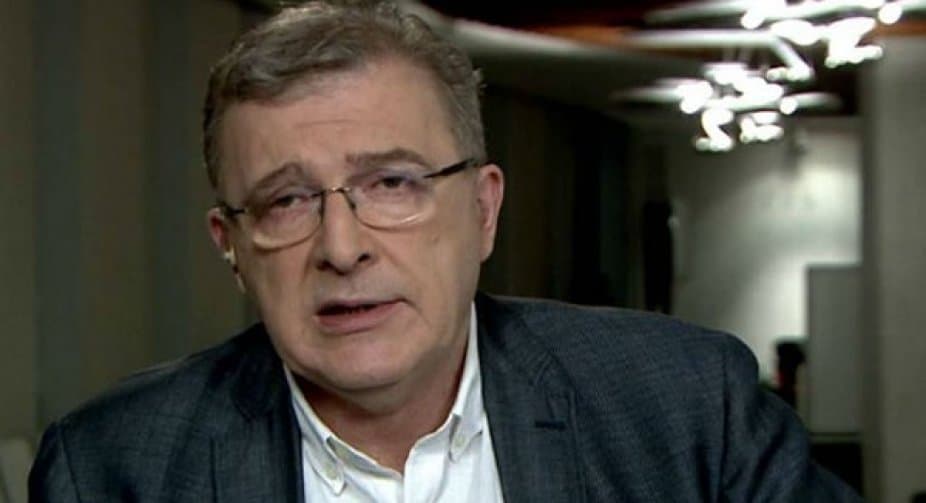
" I do not expect Europe’s approach to change. European policy is driven by ideological narratives, not pragmatism", Areshidze said

Author
Front News Georgia
Against the backdrop of a planned US delegation visit in April and discussions of a “reset” in Georgia-US relations, conflictologist Mamuka Areshidze spoke with Front News about the pragmatic and hard geopolitical realities facing Tbilisi.
Areshidze said Washington’s priorities in dealings with Georgia are not ideological or domestic political issues but specific logistical and strategic concerns, including the confrontation with Iran and the functioning of the Middle Corridor.
In the interview, he also addresses Russia’s ambiguous regional policies, Europe’s bureaucratic crisis, and the delicate diplomatic maneuvering Georgia must pursue to safeguard its interests.
Front News: The ruling team has announced that a high-level US delegation will visit Georgia in April, with talks of starting relations “from a clean slate.” How realistic is a full restoration of the strategic partnership at this stage, and what will Washington’s main condition be?
Mamuka Areshidze: The reality now is that issues and values important to Europe are largely irrelevant for the United States. Washington is focused on geopolitical tasks. What Brussels criticizes the current Georgian government for is not a priority for the Americans. Their main concern is leveraging South Caucasus countries for their own strategic goals, particularly in the context of the confrontation with Iran.
If that confrontation eases and some sort of agreement is reached - which seems unlikely - the conflict will simply shift to another plane.
There is also the matter of the Middle Corridor, transit routes, and related infrastructure, which is highly significant for the US. So, I cannot say exactly what the delegation’s mandate is. But it is clear that no one comes here simply to settle scores with Tbilisi. I don’t know precisely which delegation will arrive, but I expect it to be a practical team, focused on resolving specific operational issues. It will not be a delegation addressing political disputes. The focus will be on logistics, the use of airports, transit corridors, port development, and other practical matters.
Front News: Recently, a deputy of State Secretary Marco Rubio visited Georgia to inspect the Anaklia port project. This raised questions and speculation - could the US become involved in the port’s construction? What might Washington’s interest in Anaklia be?
Areshidze: One concern is that fertilizer supplies, crucial for agriculture, have been disrupted due to problems in the Strait of Hormuz. Components for fertilizer production previously shipped to the US and Canada are now delayed. The US is deeply concerned - evidenced by how quickly the Treasury lifted sanctions on a Belarusian company producing fertilizers.
It is very important for these components to reach the US and neighboring countries via Georgian ports, as they are used to produce agricultural fertilizers. It is planting season now, so the timing is critical. Kazakhstan and Uzbekistan also need these components, and they are hoping Georgia will facilitate transport. Beyond that, we will see how it develops.
Front News: Both the government and opposition are planning visits to Washington. How much influence does this “bilateral diplomacy” have on the final decisions of US partners, and whose arguments are more persuasive for the White House?
Areshidze: The US administration pays little attention to Georgia’s domestic politics - or those of Armenia and Azerbaijan. Washington is focused on vital issues, primarily the confrontation with Iran. They cannot resolve this conflict without maintaining credibility and achieving results. Iran does not allow them room to maneuver. So, the internal politics of Caucasus countries are not a priority.
Another important factor is the severe psychological strain within Georgia. This affects all sectors and has a tangible impact on people’s mental state. The sense of alarm has become a defining feature of daily life here, with significant social tension.
Front News: Recent Iranian rhetoric and regional turbulence pose challenges for Georgia. How can Tbilisi navigate the situation to maintain peace while avoiding becoming a target of major powers?
Areshidze: There is a saying: “Who would touch the sheep in fear of the wolf?” We have no choice but to engage strategically. We cannot isolate ourselves, nor would anyone allow us to. We must face reality, recognize the opportunities in the South Caucasus, and maintain balance through high-level diplomacy and careful maneuvering.
We must follow events in some form. Regarding Iran, the ambassador later clarified the situation. Although the tone of the letter was unacceptable, it reflected Iran’s limited options. Some may dislike Georgia’s rapprochement with the US, but circumstances are pushing us in that direction.
Front News: Russia is also active, increasingly emphasizing that it seeks dialogue with Tbilisi and claiming “the ball is in Georgia’s court.” Georgia insists that, as long as territories remain occupied, it will not restore diplomatic and political relations. How do you view Russia’s current engagement?
Areshidze: Moscow has never had a clear plan for the South Caucasus, including Georgia. Internal disagreements prevented decisive action, as seen with Armenia and the Nagorno-Karabakh issue. Russia has yet to fully reckon with its missteps and is attempting to adjust, but without a coherent strategy.
They know Georgia can take steps toward Russia, which could prompt reciprocal measures from Moscow, particularly concerning territorial integrity. But Russia has not formulated a response. Kirienko oversees this direction and opposes decisive steps. Political disagreements in Russia have delayed clarity.
Currently, the matter remains unresolved. By summer 2024, progress toward restoring Georgia’s territorial integrity seemed possible, but now the situation has reverted. Russia seeks to reassert hegemony in the region, yet lacks the resources. Georgia is in a sensitive position - territories are still occupied. Russia has not imposed its desired policy, and Georgia remains cautious while ensuring the issue is not forgotten.
Front News: How about Europe? Brussels has applied strong pressure on the ruling party, yet the government resists. If Georgia succeeds in normalizing relations with the US, could European policy toward Georgia change?
Areshidze: I do not expect Europe’s approach to change. European policy is driven by ideological narratives, not pragmatism. This applies to Georgia, Ukraine, and internal EU politics. Europe maintains its positions based on principles and narratives, not specific state interests. Brussels faces internal challenges and cannot always influence outcomes in countries like Georgia.
Front News: Many question whether the military and economic assistance Georgia receives from the West is adequate given current geopolitical risks. Is it time for Georgia to present clearer and more specific demands to its partners?
Areshidze: That is exactly the point - we do not yet know the US administration’s level of interest in the Caucasus. Once these interests are defined, Georgia can adjust the scale and nature of its requests, increasing or reducing its proposals accordingly.
By Elza Paposhvili
Tags:
Mamuka Areshidze