
Analyst Mirianashvili: if energy sector falls under US control, Iran will effectively be at America’s disposal

Author
Front News Georgia
Developments in the Middle East are entering a new, critical phase. Strategic manoeuvres by US President Donald Trump’s administration, reflected in delays to potential strikes on Iran’s energy facilities, are raising many questions. Are these real diplomatic results, or part of “energy blackmail” aimed at forcing Tehran’s final capitulation?
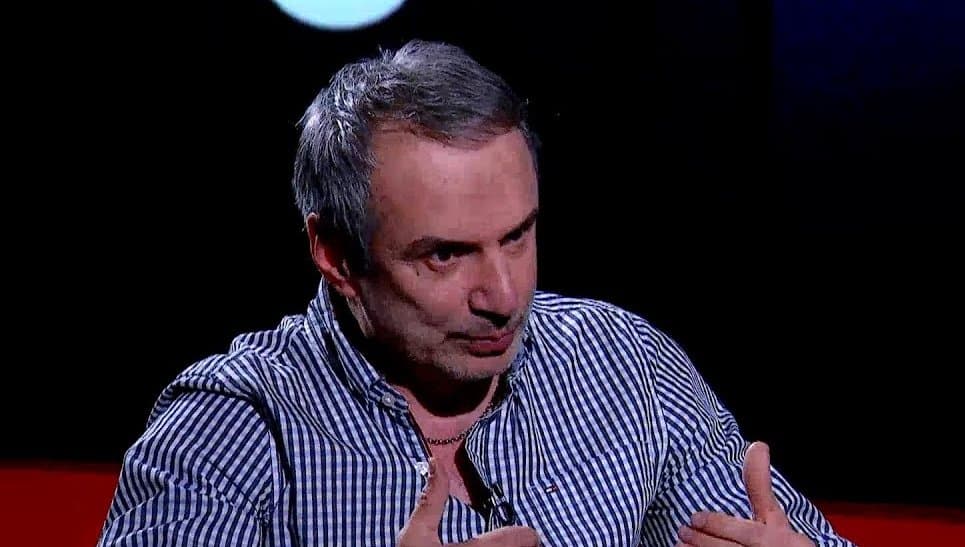
In an interview with Front News Analyst Mirian Mirianashvili discusses internal disintegration within Iran, the geopolitical importance of the Strait of Hormuz for China and possible covert communication between the United States and Iran’s regular army.
Q. Trump has repeatedly delayed strikes on Iran’s energy facilities, explaining this as being “at Iran’s request”, although Tehran and Western media deny this. In your view, are these delays the result of real negotiations, or a tactic to give Iran’s elite time for internal conflict and collapse?
A. The point is that Trump does not want to destroy Iran’s energy sector. Fundamentally, he does not want that, because the issue is placing the country’s energy under American control, not destroying it. The United States wants to “reform” Iran, as it did in Venezuela. Therefore, strikes on energy facilities would happen only in extreme cases. Of course, this is more a tool of blackmail for Trump. It is not ruled out that only one or two facilities would be targeted to further strengthen his position, especially those that represent the “heart” of the oil industry.
I know Iran’s coastline very well; I had projects in all six ports. From Bandar Abbas to Kharg and Chabahar, I am familiar with everything. A lot of nonsense is published locally, often translated from Russian-language sources. There is frequent reference to Kharg Island, but this is not an oil extraction location. Kharg is an island located away from the mainland and is used as an oil transfer hub because the waters along Iran’s coast are shallow. It is very difficult for ships to approach there, whereas around Kharg there are deep-water oil terminals.
Q. So can we say directly that capturing Kharg Island would give Trump nothing and would not allow him to open the Strait of Hormuz?
A. Yes, that is correct. The Strait of Hormuz cannot be opened by capturing Kharg. If Trump wants to open the Strait of Hormuz, he would need to take control of nearby islands: Qeshm, Hormuz and Larak. The occupation of these three islands would allow him to open the strait and speak to Iran from a completely different position.
Q. However, the question arises: does the United States have the resources to open the Strait of Hormuz without launching a ground operation inside the country? Do you believe that controlling these islands would be sufficient? What is the main problem for the US now?
A. Opening the Strait of Hormuz is not critically important for the United States, because it does not receive even a gram of oil from there. As for Europe, the Persian Gulf accounts for only five–ten per cent of its oil supply. The main stakeholders are India and China, primarily China. Imagine that China imports 700–800 million tonnes of oil, of which about 300 million tonnes come from the Persian Gulf. For China, this is a matter of survival.
This is why there is so much hysteria locally about opening the strait. Why would it be in America’s interest to make China’s position more comfortable? Trump will, of course, talk a lot about opening the strait, but facilitating navigation there is not their primary interest.
Q. The US plan requires Iran to hand over uranium reserves and abandon proxy groups, which would be equivalent to ideological suicide. How realistic is it that military pressure could force Iran’s current leadership to give up what it has considered red lines for decades?
A. Iran’s current leadership is in a very difficult situation. All of its external communication assets have proved false. If Iran had been left alone in confrontation with the United States, it would not have entered it in this way. The US had offered far smaller concessions before strikes began, but encouraged by Russia and China, Iran adopted a much tougher stance. Russia, in particular, strongly encouraged Iran. Last summer, as you know, they signed a strategic partnership agreement, after which Iran’s position towards the US hardened significantly, based on promises that it would not be abandoned.
Iran now faces a major dilemma. It does not have resources comparable to those of the United States. It cannot withstand sustained aerial bombardment. If the US begins targeting bridges and critical infrastructure, the country will face collapse. The United States previously forced even technologically advanced Germany to its knees through total air dominance; Iran would not be an exception.
However, what the US is offering now amounts to capitulation. Iran today would accept the conditions that were previously proposed, but the time window has closed. The one thing Iran cannot accept under any circumstances is handing over its energy sector, which would mean its “Venezuelisation”. If the energy cluster falls into American hands, it means that Iran, as a state, together with its governing system, would be at the disposal of the United States. Apart from energy, Iran has no other source of survival.
Before the war, Trump was offering the Iranian leadership an alternative: to distance themselves from Russia and China and become US allies, even offering a political umbrella that no other administration had proposed.
Q. On 8 March, the Assembly of Experts reportedly selected Mojtaba Khamenei, although he has not appeared publicly. There are reports he was injured and taken to Russia, while Trump has suggested he may be dead. How legitimate is his authority inside Iran and who is governing the country now?
A. Even the Americans find it difficult to answer this question; no one knows exactly where Khamenei’s son is. As a result of sustained bombardment, we are now seeing a situation in which power in Iran is disintegrated. The country is no longer governed from a single centre. For example, reports from Hormozgan suggest that local authorities have effectively distanced themselves from the central government and are attempting to establish direct communication with the United States with the help of the United Arab Emirates. The same is said about Khuzestan, another coastal region where the majority of Iran’s oil is located. Around 80 per cent of Iran’s oil and gas reserves are concentrated in these two provinces. This indicates that the central government, as it previously existed, is no longer functioning in the same way.
Q. Can we say that Iran is now governed by a military junta?
A. At present, armed resistance against the United States is being carried out by regional units of the Islamic Revolutionary Guard Corps, which often make decisions independently. In some areas, local police have disarmed these units, warning them not to fire at American or Emirati forces, as retaliatory strikes hit these regions hardest. Similar processes are taking place elsewhere.
It should be remembered that Iran has two armies: the Revolutionary Guard Corps and the regular armed forces. The regular army appears to be maintaining practical neutrality. The Islamic authorities have not been able to involve it in combat operations, which likely reflects some form of communication with the United States.
Q. When Trump says influential Iranian groups have contacted him, could he be referring to the military, particularly the army command?
A. It is possible, although Trump does not speak openly about this, likely to avoid exposing them. However, one thing is clear: US and allied forces are not targeting Iran’s regular military bases. Strikes are focused only on the Revolutionary Guard Corps and affiliated units. Civilian state institutions, such as the presidential administration and foreign ministry, are also not being targeted.
This suggests that civilian authorities and the regular armed forces may be in serious communication with the United States and Israel. The aim of the military operation appears to be to weaken the Islamic component of the government as much as possible and create conditions for other forces to take control.
Tags:
Mirian Mirianashvili