Papuashvili called on the European Commission to distance itself from what he described as an attack on the Church and said European institutions should abandon what he characterised as hostile rhetoric towards Georgia and its religious institutions

Author
Front News Georgia
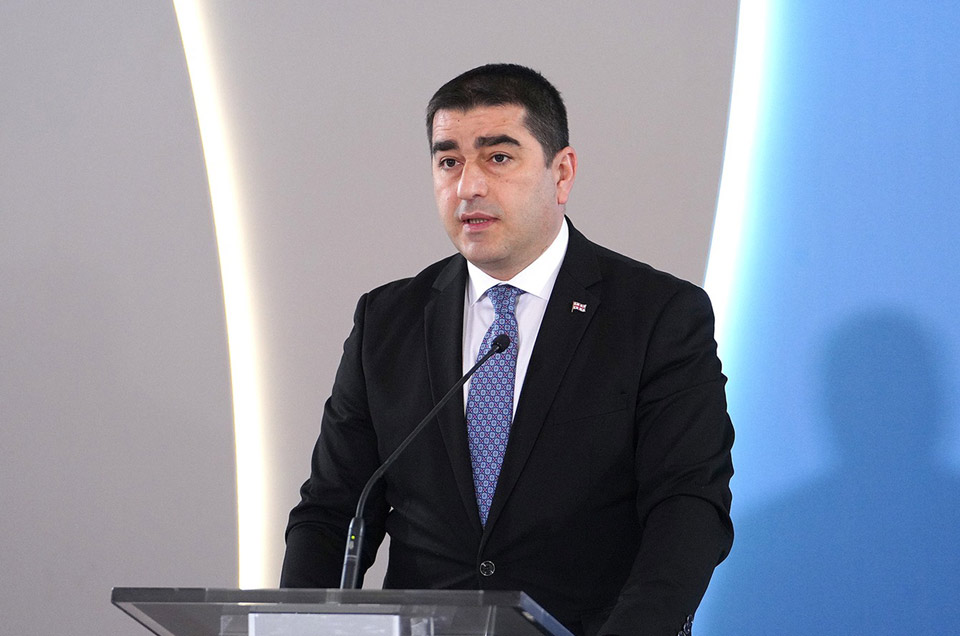
Georgian Parliament Speaker Shalva Papuashvili has accused the European Parliament of adopting a position towards Georgia's sovereignty that he claimed resembles Russia's approach, following the adoption of recent resolutions by the European Parliament and the Parliamentary Assembly of the Council of Europe.
Speaking on Thursday, Papuashvili said the latest European Parliament report challenges Georgia's sovereignty and democratic institutions, arguing that it gives Brussels the authority to determine the legitimacy of Georgia's government rather than the Georgian electorate.
According to Papuashvili, a report prepared by Lithuanian MEP Rasa Juknevičienė effectively suggests that the legitimacy of Georgia's government should be determined by political institutions in Brussels rather than by Georgian voters.
"The European Parliament has effectively declared that the right to determine the legitimacy of Georgia's government belongs not to the Georgian people but to Brussels bureaucracy," Papuashvili said.
He argued that such an approach rejected fundamental democratic principles and went on to draw a comparison with Russia's policy towards Georgia.
"While Russia denies Georgia's sovereignty over one-fifth of its territory, the European Parliament refuses to recognise Georgia's sovereignty across its entire territory," he said.
Papuashvili also criticised references in the report to former president Salome Zourabichvili, saying it was unprecedented for a European institution to describe her as Georgia's legitimate representative while referring to the country's elected parliament, government and president as a "de facto" authority.
Papuashvili added this position showed a lack of respect for the more than two million voters who participated in Georgia's parliamentary elections.
The parliament speaker also objected to references to the Georgian Orthodox Church in the report, particularly passages linking it to Russian religious networks and influence operations.
He described the language as the first open attack by a European institution against the Church and said it was offensive to the religious beliefs of millions of Georgians.
"The simultaneous attack on Georgia's sovereignty and the Georgian Orthodox Church is, in essence, an attack on the idea of Georgian statehood," he said.
Papuashvili called on the European Commission to distance itself from what he described as an attack on the Church and said European institutions should abandon what he characterised as hostile rhetoric towards Georgia and its religious institutions.
He also argued that recent developments demonstrate the need for renewed dialogue between Georgia and the European Union.
According to Papuashvili, restoring relations would require recognition of Georgia's sovereignty, an end to what he called disinformation against the country's democratically elected government, and adherence to the principles of international law.
Tags:
Shalva Papuashvili