
Expert Dzabiradze on special forces arrests: ‘main reason is attempt to break international isolation”

Author
Front News Georgia
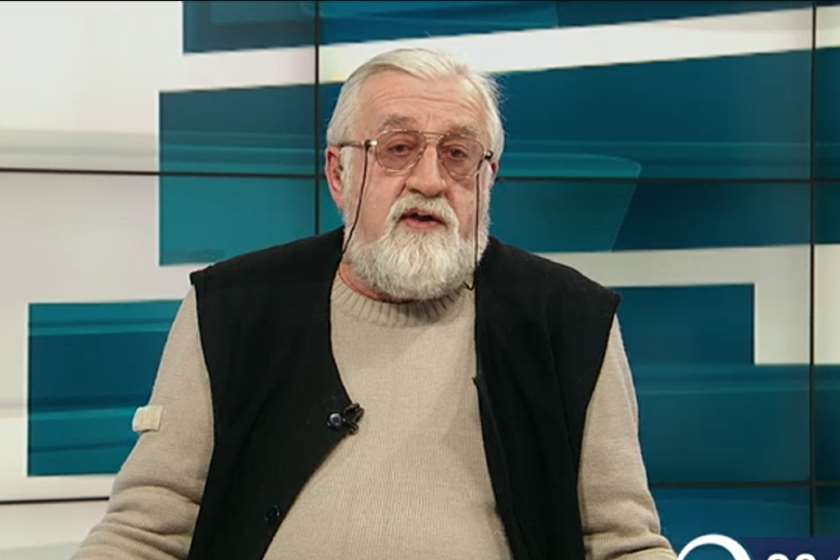
In an interview with Front News, expert Vakhtang Dzabiradze assessed the current political developments in Georgia, including the arrest of special forces officers, the Government’s attempts to overcome international isolation and the unclear prospect of snap elections.
According to the expert, the recent decisions of the ruling Georgian Dream party are driven less by domestic political considerations and more by geopolitical factors — particularly the desire to restore relations with Washington.
Q. Let us begin with the arrest of five special forces officers accused of brutally assaulting journalist Guram Rogava, politician Levan Khabeishvili and another citizen. The opposition linked this move to both domestic and foreign political developments. One version suggests the timing coincided with the visit of an aide to US Secretary of State Marco Rubio, while another theory is that Georgian Dream may be preparing for snap elections. What is your assessment?
A. The idea that the authorities somehow failed to identify the perpetrators for such a long time and only now “discovered” them is naive. Everyone knew perfectly well who these individuals were, but until now there was no political will to arrest them.
Now certain factors have emerged, prompting Georgian Dream to single out those five officers towards whom public sentiment was especially negative because of the crimes attributed to them.
The logic behind the Government’s actions is coercion — they were forced into making this compromise. I believe the main reason is an attempt to break international isolation. I do not directly connect this to snap elections. Elections may only become the next step if this decision fails to produce results and the isolation continues.
Q. So you believe Georgian Dream’s actions are more dependent on foreign developments than on internal political processes?
A. Yes, absolutely. Events unfolding around Iran will become very significant and I would not rule out that Georgian Dream may decide on snap elections only afterwards.
I do not believe these steps are primarily driven by internal factors. Developments in the war in Ukraine will also be important — any scenario there will directly influence the Government’s decisions.
Q. Recently, the opposition has frequently discussed the possible resignation of Prime Minister Irakli Kobakhidze and potential replacement candidates. How likely do you think Government reshuffles are and are they also linked to external factors? Under what circumstances would replacing the prime minister become necessary?
A. Again, if Georgian Dream fails to overcome international isolation and the domestic political situation deteriorates further, [ruling party founder] Bidzina Ivanishvili will be forced to change course.
The socio-economic situation in the country is already difficult. If political crisis and worsening economic conditions coincide, the authorities will begin searching for a way out — if they have not already started doing so.
A change in policy would inevitably lead to Kobakhidze and his team being replaced. If Ivanishvili truly wants to restore relations with the West, Kobakhidze is not the right figure for that because attitudes towards him are highly negative both domestically and internationally.
Usually, when a political course changes, the country’s top leadership changes as well.
Q. The Government has described the visit of US Deputy Assistant Secretary of State Sonata Coulter as an attempt to “reset” relations. Do the high-level meetings with both the ruling party and the opposition suggest that Washington wants to thoroughly assess the situation for future strategic cooperation?
A. There are two dimensions here. Everything began with the telephone conversation between Rubio and Kobakhidze, followed by visits from American officials and a softening of the Government’s rhetoric.
Certain steps were taken under pressure: the arrests of special forces officers, the opening of corruption cases and so on.
As for American interests, the primary issue is Iran. The Iranian regime will most likely remain in place, which makes Georgia critically important for the US as a geopolitical platform.
The second issue is the Anaklia [deep sea port project on Georgia’s Black Sea coast aimed at strengthening the Middle Corridor trade route] and the security of the Middle Corridor [the transport corridor linking China and Central Asia with Europe through the South Caucasus]. If Georgia remains stable, it will continue to be America’s most reliable partner in the region.
Our Government is authoritarian by nature, but establishing full authoritarianism in Georgia is impossible — you cannot control everything here. That is precisely what the United States is demanding: that the country not drift fully into authoritarianism.
Q. At the same time, the opposition should also be shaping the political agenda, yet we see internal disputes even within newly formed alliances. Is the opposition ready for snap elections today?
A. No, the opposition is not ready today. But everything depends not on their mood, but on what society thinks.
Even if the Georgian Dream called elections tomorrow, it might still come first, but that would not bring stability to the country.
Public frustration is growing, although it has not yet reached its peak — people are more resigned at this stage. Because of recently adopted laws, the middle class is being weakened, people are irritated, but they do not see an alternative in the opposition.
The opposition must understand that the key issue is not uniting political parties, but uniting the electorate and attracting voters who support neither Georgian Dream nor the United National Movement.
Simply repeating that “Russians are in power” is no longer effective.
Q. Then what is the purpose of the protest rally announced for 26 May? Will it simply be another symbolic demonstration to measure turnout?
A. The opposition does not currently have greater resources than this. Regardless of how many people come out on 26 May, what comes next?
Will we see a repeat of the 4 October scenario? Will they declare civil disobedience and again attempt to storm institutions somewhere?
To be honest, I would be surprised if large numbers attend on 26 May.
In general, the opposition relies too heavily on symbolic dates, which produces no real results. They do not even want to analyse the events of 4 October properly.
Because of this, public attitudes towards them have become even more negative. If they continue offering people the same messages they hear every day on television, expectations for change will remain low.
Tags:
Vakhtang Dzabiradze