
Iran economically suffocating, while ceasefire approaching in Ukraine, General Kapanadze
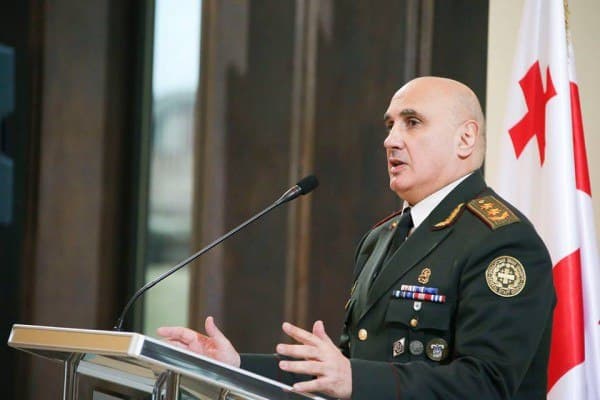
Putin is trying to bargain, and Trump understands this very well, General Kapanadze

Author
Front News Georgia
Two key global flashpoints - Ukraine and Iran - are entering a decisive phase. As US President Donald Trump speaks about the possibility of a short-term ceasefire in Ukraine and a strict naval blockade of Iran, military experts are offering deeper analysis of the developments.
In an interview with Front News, General Vakhtang Kapanadze explains why the Russia-Ukraine war has reached a culmination point, what a “breathing space” on the front line means, and how realistic an internal revolutionary scenario in Iran is under economic isolation.
Q: After speaking with Vladimir Putin, President Trump has mentioned the possibility of a “short-term ceasefire.” In your view, how realistic is this initiative given the current situation on the front line? Could this simply be an attempt by Putin to “buy time” in order to regroup and prepare for a new offensive?
A: I have been expecting this for quite some time. I previously believed that similar steps would be taken. Russia, like Ukraine, is not in an easy position, so both sides have reached a point of culmination. Accordingly, if this happens - and most likely it will happen before the end of the year - we are talking about a ceasefire, not a peace agreement. These should not be confused. As for how long it will last, that is another question.
Q: Who needs a pause more right now? Given current military resources and losses, for whom is a ceasefire more critical - Ukraine, to catch its breath and balance Western aid, or Russia, which despite holding the initiative has suffered enormous losses in manpower and equipment?
A: Of course, this will be an opportunity to catch one’s breath so that both sides can prepare for the next phase. When that phase begins depends on the sides themselves. For example, a ceasefire agreement between North and South Korea is still in force to this day. The same applies to Georgia - we only have a ceasefire agreement with Russia; we have not signed a peace treaty. In fact, we are still in a state of war with Russia.
As for how each side will use the ceasefire, that depends on what resources they have. There is no doubt that Russia will begin accumulating its capabilities. Ukraine will do the same. Ukraine also needs a breather, because Russian strikes are mainly targeting civilian infrastructure. Many people in Ukraine oppose a ceasefire agreement because they believe Russia will use it to mobilize its forces. However, since the United States holds certain leverage over Ukraine in terms of assistance, it may be better for Ukraine to follow the American rules of the game.
At the same time, another issue arises - a war of attrition, which is what we see in Ukraine. What matters here is not what you are using on the front line, but what resources you still have that have not yet been used. In this respect, I do not see Russia having significant additional resources. They have only three options: first, to declare full mobilization and create a million-strong army to achieve a breakthrough through sheer manpower; second, to use nuclear weapons; and third, to involve Belarus in the war. After five years of war, Russia has not been able to introduce anything new, either technically or tactically.
As for Ukraine, it stands behind Europe - a 500-million-strong Europe with much greater economic capacity than Russia. This Europe will equip Ukraine with new-generation, top-level weapons.
Q: Does the statement by German Chancellor Friedrich Merz about possible territorial compromises indicate a shift in the position of leading European countries? Could this become a basis for weakening Western unity?
A: I think this is more of a political statement and not something done in practical terms. Let’s look at reality: a political statement is one thing, action is another. The same applies to Trump’s statements. For Ukraine, the key issue is the $90 billion it will receive in aid. This assistance also includes a significant number of German air defense systems. So when we talk about a ceasefire, it does not mean that something must be conceded to Russia.
Q: However, we know Russia’s conditions. Do you expect it to change its position now? Is it likely that Putin will once again put forward ultimatums in exchange for a ceasefire?
A: Yes, Russia is making demands. At first, it demanded Kherson, Zaporizhzhia, and the parts of Donbas that it does not even fully control. Now it has narrowed down to the territory of Donbas. Ukraine’s position is clearly stated: if there is a ceasefire, it must take place along the current zero line, where the troops are positioned now. A second acceptable option, which Volodymyr Zelenskyy has mentioned, is that Ukraine would concede Donbas only if it receives guarantees that Russia will not resume aggression. For this, NATO and European troops would need to be deployed. I do not think both sides are ready to agree to this now, so the first option is more likely - a ceasefire along current positions.
Q: Let’s turn to Iran. President Trump says that a naval blockade (of the Strait of Hormuz) is more effective than bombing. From a military perspective, how sustainable is this type of blockade, and can it force Iran to abandon its nuclear ambitions without military escalation?
A: The current government in Iran will not give up its nuclear ambitions under any circumstances. No matter how this confrontation ends, Iran will continue trying to develop nuclear potential. As for the Strait of Hormuz, a blockade by the United States would deprive Iran of about $430 million per day. This includes both imports and exports. Within a few weeks, Iran will run out of free storage capacity for oil, because it will no longer be able to export it. They will be forced to shut down wells. This is a very complex engineering process, and reopening them is not always possible; even if they are reopened, 10-15% of production is lost. So Iran is in a very difficult economic situation. Stopping oil production will lead to mass unemployment.
Q: If Iran is indeed “suffocating” under the blockade, could this push Tehran into a high-risk move - launching a large-scale regional conflict that might ultimately trigger direct US military involvement?
A: It is out of the question. Iran cannot start a war in the region now - it would have to confront Turkey and then Saudi Arabia, which is unrealistic. It may continue limited strikes, but it does not have the capability to start a serious war. Closing the Strait of Hormuz would not exclude the use of military force by the United States. Two aircraft carriers are already in the region, which is a considerable force. In addition, a marine landing contingent is present. What Trump says is important - closing Hormuz is no less destructive than a landing operation on Khark Island. You get essentially the same result.
We should not forget that the blockade also restricts imports. Around 60–70% of food and medical supplies entered Iran by sea. This puts the population in an extremely difficult situation. Even members of the Islamic Revolutionary Guard Corps need salaries - no one sacrifices themselves without compensation. During the Shah’s time, the revolution was triggered by social unrest, and disruptions in oil production were one of the most painful factors for the population.
Q: Finally, on Putin’s role regarding Iran. Trump says Putin wants to be involved in the Iran nuclear deal. In your opinion, is Russia genuinely interested in limiting Iran’s nuclear capabilities, or is it simply trying to use Tehran as a bargaining tool in relation to Ukraine?
A: Of course, it is the latter. Putin is trying to bargain, and Trump understands this very well. That is why he told him: “You deal with Ukraine and resolve that problem.” Who believes Putin’s word or any agreement he signs? With one hand he helps Iran, and with the other he pretends to help the United States. It would be laughable if it were not so tragic.
By Elza Paposhvili
Tags: